Marijuana Side Effects

marijuana, dispensary, dispensaries, medical marijuana, marijuana as medicine, marijuana side effects, health

Prescription drug commercials are the best. They’re always filmed in subdued slow-motion with an ethereal, gauzy quality, kind of like a soap opera. There’re always plenty of pretty people frolicking around with toothy smiles. And there’s always a calming, hypnotic voice in the background listing off the side effects that come from traditional pharmaceuticals. I usually start laughing during this part of the commercial, but my family always looks at me like I’m a little daft; I guess they’ve become desensitized to the insanity on TV. But if you think about it, these commercials really are morbidly hilarious, so my laughter is perfectly apropos.

A few years back, there was a commercial for a drug designed to combat restless leg syndrome, and one of the side effects was “biting off your tongue.” I guess that in rare cases, this perfectly legal drug would cause people to have unexpected seizures wherein they’d bite of their own tongues. Isn’t that insane? Imagine for a moment some fool walking into a doctor’s office to pick up a script for his twitching legs just to end up biting off his tongue. Are you laughing? No? Well, maybe my family has a valid reason to look at me askance for my giggles, but that’s beside the point. What matters is that in modern times, you can turn on the television, stumble across a pleasant-seeming commercial, and listen to a calm, feminine voice tell you that you might “bite off your tongue” if you buy what she’s selling.

And it gets worse. Lately, since there are so many ways to die thanks to what you buy at the pharmacy, that calm voice has simplified things: more often than not, if you listen close enough, you’ll hear it say that one of the side effects is “death,” plain and simple. Hell, one of the side effects associated with most of the anti-depressants out there is “suicide,” but that doesn’t stop the commercials from playing right in the middle of my nightly news. It’s lunacy: you can buy pills that’ll kill you or make you bite off your tongue, but the innocuous plant we sell at The Greenery is still illegal in most of this hypocritical country—there’re are still people in places like Florida who’re serving life sentences for marijuana possession, while pharmaceutical reps are earning six-figure-salaries for selling pills that’ll make you kill yourself if you take them for depression. It’s asinine, because do you know what won’t kill you? Marijuana.

However, there are a few negative side effects associated with cannabis. Yes, I’m a budtender and a staff writer for a dispensary, but I’m not one of those stoners who’ll tell you that marijuana is a completely harmless drug, and it’s my job to be honest and educational in these posts. So, I’ve decided to list and discuss the three known negative side effects of marijuana—afterward, please feel free to juxtapose marijuana’s darker side against “biting off your tongue” or “death” to see if you’d still rather pop those pills. Here we go…

  • Xerostomia: it’s just a fancy way of saying dry-mouth. Yes, it’s true, sometimes smoking pot will give you cottonmouth. And if you let it persist, it can cause bad breath or gingiva (gum) irritation. But it’s easy to fix—just drink water or invest in some Biotene. And guess what: after drinking that water, you’ll still have your tongue, so I’d say we’re doing okay so far.
  • Paranoia or Anxiety: these two feelings are usually associated with Sativa strains, but if you smoke anything with a high THC percentage, you’re sure to start looking over your shoulder eventually. It happens to the best of us. But these feelings aren’t permanent—they go away as soon as the high starts to fade—and they aren’t nearly as bad as “death,” so we’re still in the clear.
  • Cannabinoid Hyperemesis Syndrome: this is a new one—the first official case was reported about nine years ago, and the syndrome wasn’t validated until 2009. Before I go on, I just want to tell you that I’ve been smoking for quite some time and I’ve known quite a few smokers; I talk to people every day who smoke weed because I’m a budtender, and I’ve never met anyone who suffers from this side effect. Basically, it’s possible to develop CHS after fifteen to twenty years’ worth of chronic marijuana use, and once you get it, your stomach gets upset every time you smoke pot. The nausea can be alleviated temporarily by a hot shower or bath, but the only permanent fix is to stop smoking marijuana (if you’ve been smoking chronically for twenty years, it might be time for a break anyway). And once you stop smoking, the symptoms of CHS go away immediately, and there isn’t any lasting damage.

And that’s it; I’d say we’re three-for-three regarding marijuana-related side effects that’re better than what you get from pharmaceuticals. Actually, I know for a fact that pot beats pills because I meet someone every day (quite literally) who comes into our dispensary looking to escape their prescriptions. These people have suffered for years under heavy doses of opioids or synthetic “medicine,” and they’re sick of it. They tell me how much their lives suck, or if they’ve already switched over to pot, they tell me how much better their lives have become. I get to help these people; it’s one of the best parts of my job. And with each and every one of them, I discuss the potential side effects of marijuana, just like I’ve done in this post, because it’s important to know what you’re getting in to. So, please, if you still have any questions or doubts about how pot might hurt you after reading this article, just call us at (970) 403-3710 or walk into our dispensary at 208 Parker Avenue and corner one of our budtenders. Ask us all your questions about marijuana’s side effects, and we’ll take the time to answer honestly. We’re Your Best Buds, and that’s what we do.
Children and Marijuana

children and marijuana, legal marijuana, legal pot, teens and marijuana,

You can pick your platitude—oil and water, family and business, drinking and texting—because they all work: children and marijuana don’t mix. Trust me, I’m speaking from experience: I was one of those not-so-good children who started smoking way too early, and I have a precocious teen who smells a little suspicious from time to time. She’ll walk in our door after a night out and start being super nice, which for a teen, is a dead giveaway that something is amiss (the red eyes and copious amounts of perfume round out the trifecta of obviously-stoned-minor). Of course, I tell her that smoking pot at such a young age isn’t the best of ideas, and of course, she always comes back with the classic teenaged rejoinder: “dad, you smoke, and you work in a dispensary, so you’re a hypocrite.” But am I? Am I failing to practice what I preach, as my daughter would have you believe, or am I making a prudent parenting choice by yelling “hell no” every time my daughter thinks it’s okay to ask her parent who works in this industry for marijuana? Well, I’ll tell you the same thing I tell her, and let you decide. And if you’re a parent, please take notes because this information might come in handy.

The first issue to consider is addiction. Most professionals in my situation will tell you that marijuana isn’t addictive, and to an extent, this is true because all the studies out there show that the human body doesn’t become chemically dependent on cannabis, even after long-term use. As a side note, did you know that it’s actually possible to die from alcohol addiction withdrawals? Crazy, right? Anyway, while marijuana might not be chemically addictive (like every other recreational drug known to man), I will admit that it’s possible to become emotionally addicted to pot. For the record, it’s also possible to become emotionally addicted to donuts, and diabetes will kill you, so I’d still argue that pot is safe for adults.

The National Institute for Drug Abuse calls an emotional addiction to weed “marijuana use disorder,” and as a parent, it’s important to know that teens who start smoking at a young age are four to seven times more likely to develop this condition. The reason for this is simple: the frontal lobe of a child’s brain (the place where decisions happen) isn’t fully developed. If a child makes a decision, like using marijuana as a coping mechanism, and the decision turns out to feel beneficial, the choice becomes validated mentally and the teen becomes more likely to make the same decision over and over again. The teen will start to rely on marijuana as a crutch because it worked out the first time—this same thing can happen with alcohol and sex and all the other things we try to steer our children away from. That’s why it’s important to have an adult’s maturity and life experience before smoking pot: we know what’s responsible and right, just as we know what’s just a temporary fix, like getting high.

The health risks associated with marijuana use also need to be considered. The truth is that we just don’t know what happens to children when they smoke because it hasn’t been studied sufficiently. True, we know for a fact that medical marijuana offers a much better alternative to traditional pharmaceuticals when it comes to treating seizures, the pain and appetite loss associated with cancer, and many other illnesses that befall the young, but we really don’t know what stems from chronic recreational marijuana use by children. The experts say it might interfere with cognitive development or that it might lead to a lower IQ, but only time will tell. And that’s why it’s important to arm yourself with something better than “I’m a grownup and it’s legal for me, and you’re a kid who will get in trouble, so that’s why I can smoke and you cannot.” Teens will rebel against such a line with all the angst in their arsenal, and it’s important to tell them the truth: children who use marijuana might become dependent or underdeveloped mentally, and they don’t have the maturity needed to make good decisions about repetitive marijuana use because their brains aren’t as developed as an adult’s. Saying something like this to your child will shut them right up because no amount of teenaged attitude will defeat facts and logic, and there’s no way they’ll be able to call you a hypocrite.

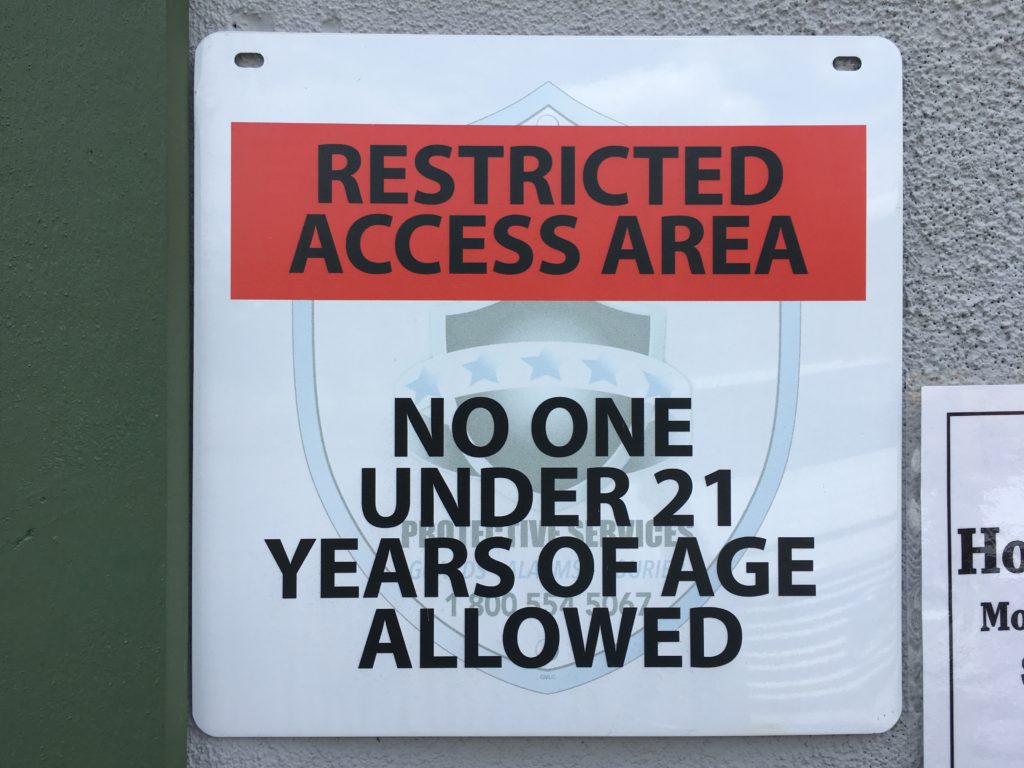
At The Greenery, we take this issue very, very seriously. We’re stewards of this industry, and quite a few of us are parents; we don’t want our kids smoking pot just like we don’t want your kids smoking pot. We card everyone who walks through our door, and if the ID doesn’t prove that someone is twenty-one-years old, we kick that someone out our door with quickness. But this doesn’t mean that we don’t support an adult’s right to smoke marijuana openly if they have children. That’s why we provide for parents in our dispensary educational pamphlets on how to talk to your teen about marijuana, that’s why we write blogs like this one, and that’s why we’ll take the time with any customer who asks to talk about being responsible with marijuana around children. Doing so is completely possible. We recommend that adults keep their marijuana locked away from their children, just like a responsible parent would do with alcohol and firearms. And believe it or not, there’re products on the market designed to help you get it done. There’re lockable, odor-proof stashboxes out there like this one—hell, there’re even safes out there like this one that’re designed specifically for keeping marijuana edibles in the refrigerator. All the tools you’ll need to be a responsible, marijuana-smoking parent are out there; you just need to look, and you just need to ask. So please, do exactly that. Come in to The Greenery and pick up one of the pamphlets I mentioned, or ask one of our budtenders about ways to keep your marijuana use discrete. We’ll give you the tools and advice you need, because that’s what Your Best Buds are for.

What’s it like to get high?

marijuana, pre-roll, edible, high, pot, marijuana deals

Three people have asked me this question before I sold them marijuana. It’s a strange feeling—knowing that you’re selling pot to someone who’s only heard stories about the high—and it’s an honor to answer it. But in a way, it’s a nebulous concept, one that seems ineffable once you try to put it into words, and I had to pause mentally each time someone looked at me across the counter and asked this question.

The first gentleman who asked me what it was like to get high practiced an Orthodox faith. He was kind and paternal. He’d already spent a few years in his eighties and he was in a wheelchair, resplendent in his tailored suit. He had sharp eyes and hair so white it was translucent; he sat in his chair and looked up at me and asked if the marijuana I sold would make him hallucinate. He’d tried every prescription drug on the market, searching legally for something to alleviate the pain associated with the neuropathy that’d already cost him a leg, and he was desperate. He’d never taken any sort of recreational drug because it was forbidden: no alcohol no nicotine no marijuana. And he didn’t know what to expect—he was afraid that he might see flying animals or go mad, just as the early propaganda predicted. I took my time and described the sensation, but I’ll get to that in a little bit.

The second gentleman who asked me what it was like to get high hadn’t seen many cities. Quite literally, he drove straight to our dispensary from a compound in Utah. This man was kind too, but his clothes were simple and unadorned. His hair was the color of dried clay and his demeanor was unassuming. He didn’t suffer from pain, but he was tired of living someone else’s life. Marijuana had been forbidden to this second gentleman as well, as had coffee and profanity, and he’d decided to just jump right in and smoke something salacious after thirty-five years of abstinence. But first, he wanted to know what it was like; he wanted to be sure that the marijuana myths he’d heard wouldn’t turn true after the first puff.

The third person who asked me what it was like to get high needed a translator; we used her adult grandson. He was a patient man, one who’d been smoking for years, and he held his grandmother’s hand as she walked in. She was an archetype: she wore a permanent smile and a floral print dress with large glasses nestled into her curled, grey hair. She walked around timidly, as if the wares we sold might leap out and thwart over sixty years’ worth of resolve, but she warmed up to me almost immediately. We talked through her grandson because my Spanish es no bueno, and her biggest fear was that she’d become instantly addicted; she wanted to be assured that there was a road back from the marijuana gummies I was showing her. And she wanted to know what it was like to get high.

Well… it’s wonderful. It’s pretty much exactly what Goldilocks was looking for: not too hard, not too soft, not too debilitating and not too ineffectual. After the smoke comes in and goes out, the tension disappears. Muscles relax that you didn’t know were strained, and you smile involuntarily. Your whole body, your very soul, heaves a sigh of relief, comfort, happiness. The world starts to look bright and beautiful and you see the good you’d overlooked just a moment ago. The clothes you’re wearing start to feel like pajamas, the music you hear starts to sound symphonic, and the food you eat starts to taste like the wonderment you’d find in Wonka’s chocolate factory. It feels like you’re standing in a ray of mana that’s raining down from above just for you, and as you bathe in it, life’s worries fade to the insignificant things they truly are; the pain dwindles.

And it isn’t addictive. This has been proven scientifically time and time again. The negative side effects are laughable: xerostomia (dry-mouth), an increased appetite (bring it on), and occasional anxiety (there is such a thing as too much of a good thing). In fact, and I tell this to worried customers all the time, marijuana is the second safest recreational drug out there. I’m sure you’ve read all the articles out there like this one, but just in case you haven’t, the super-smart people over at The Global Drug Survey have crunched all the numbers and compiled all the data (like emergency room visits), and they’ve ranked the nine most popular recreational drugs as per the danger associated with each one. Magical Mushrooms are the least dangerous, marijuana is a close second, and alcohol (you know, that socially accepted stuff) comes close to beating out meth as the worst stuff out there. Figures.

Frankly, I’m not sure why someone wouldn’t try marijuana—life needs to be lived—and when first-timers fall into my lap, I do my duty. I tell them the truth, and I describe what it’s like to get high honestly, sans flying animals and madness, and I make sure they leave our dispensary with the comfort that comes from making the right decision. As a budtender at The Greenery, that’s my job, and as one of Your Best Buds, it’s my pleasure.

Best Bud of the Month

Budtender, Dispensary, Dispensary deals, budtender

Libby Lunda
Retail Floor Manager

Libby used to sit by a stream in Wisconsin to smoke with her friends. They’d buy quarter ounces for fifty bucks, and the stuff was just as horrid as you’d imagine: brown brick-weed that had just as many seeds and stems as it did flower. They’d load their bowls and winnow out the seeds, and then toss them in the river, watching them float away to somewhere unseen. Libby would imagine her seeds riding the rapids and then landing to sprout on an island—it was a magical garden of sorts, a place where marijuana was legal and accepted. But that place didn’t exist in Wisconsin, so when Libby grew up and had a child of her own, she moved her family to Durango, because if you think about it, this is where her seeds have come to grow; this place is the island she imagined. And now, Libby Lunda is your Best Bud of the month.

Q.  When did you start working for The Greenery?
Libby.  “I just celebrated my two-year anniversary!”

Q.  What’s your favorite way to enjoy marijuana?
Libby.  “I love bongs, and Sour Diesel is the best strain of all time.”

Q.  What’s your favorite outdoor activity?
Libby.  “Gardening and growing. I love to stand back when it’s all done and look at the aftermath. The work is worth it when you see what you’ve created.”

Q.  Tell us about your pet.
Libby.  “King is an XL Bully, and he’s a little shit. He’s a puppy trapped in a beast’s body.”

Q.  Which station do you stream while you’re working at The Greenery?
Libby.  “Top hits, or anything modern.”
(For the record, as one of Libby’s coworkers, I can tell you that when the door is shut at the end of the day, she puts on old-school rap and turns it up. Don’t be fooled by that “top hits” nonsense; Libby is a straight-up gangster.)

Q.  What do you like most about working at The Greenery?
Libby.  “I love our customers. I love getting to know the regulars and helping the tourists who are just as excited about legal marijuana as I am.”

Libby is the sort of person who combats the budtender stereotype. She isn’t in this industry because she sees it as a novelty or because she’s some stoner who’s looking for an employee discount. She’s here because she knows this industry has a future, and she’s the type of young professional who plans on capitalizing on the unique opportunity that has sprouted downstream from Wisconsin. And she really does love her customers as much as she says. I’ve seen her perk up in the middle of a bad day just to dedicate all of her attention to someone who’s just looking for some relief. Libby is a compassionate budtender who cares genuinely for each and every one of The Greenery’s customers, and because of that, she is definitely your Best Bud of the month for August. Thank you Libby!

Budtender, dispensary, dispensary discounts, marijuana education

Indica vs. Sativa

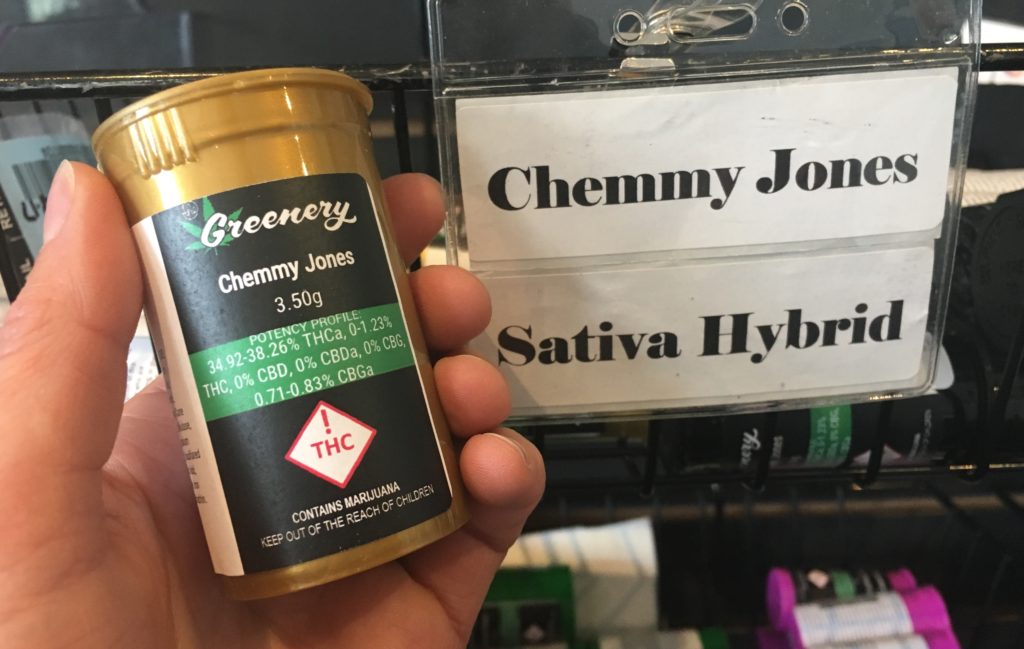
Indica vs Sativa, Chemmy Jones, Sativa, Hybrid, Pot,

There’re over four-thousand different strains of marijuana growing across the globe, sprouting like the wondrous weeds they are, but each of them falls into one of two categories: Indica or Sativa. Of course, most strains have been crossbred so many times that it’s difficult to tell which is which, and just about everything out there is a hybrid thanks to the incestuous way plants get together and make more plants—after decades of desultory pollination, there’s no longer a definite line in the sand between the two categories, and that can make things difficult when you’re chasing the effects that come from one side or the other.

But at The Greenery, we’re here to help. We know the lineage of each strain we sell and we’ve smoked all of them. We can tell you which bud will make you sleepy, which bud will perk you up, just like that Cheshire cat could tell Alice which side would make her bigger, which side would make her small. But before we get into specific strains, we should discuss the two, overarching categories so you have a jumping off place; we’ll start with Sativa.

You probably drew a Sativa leaf on your notebook back in high school. Yes, all pot leaves have the same number of fronds and they’re instantly recognizable thanks to the jagged edges, but Sativa leaves are a little different than their fatter Indica cousins. They’re light green and thin and they spread out perfectly to form the symbol we use for all marijuana. And the plant itself is special too. It can grow into a veritable tree, standing over two-stories high if you let it, but most varieties top-out at around ten feet.

Sativa is a day-time pot. The high is energetic and creative, and it’ll give you a bright haze that’s perfect for summer days, happy times. These cerebral strains live in your head and pollinate your thoughts with creativity, they make you giggle and go out, connect with what’s important. Sativa strains should remind you of tie-died T-shirts and road trips and the highlife we’ve been trying to recapture from the hippie days our parents reminisce about. And from a medical standpoint, these strains can battle back pain and headaches and depression, and for some, they can even act as an appetite suppressor, thereby destroying the “munchies” stereotype you see in cliché pot movies. However, I’d be lax if I didn’t tell you about Sativa’s darker side, so I’ll be honest about the possible negative side effects: with one puff too many, these strains are more likely to bring with them anxiety and paranoia. But you know what? Given that traditional pharmaceuticals and other recreational drugs (like booze) can kill you, I’d say a little anxiety is worth it (there’s no such thing as a pot writer who doesn’t toss in a caveat like that, so please forgive me).

Now, on to Indica—these varieties are famous for their dark green, broad leaves, and a musky scent. The plants themselves are short and squat, usually topping out at about six feet, and they’re originally from India and the Middle East (ergo, the name). Indica is a nighttime pot, perfect for good movies and comfortable blankets thanks to the body-high these strains bring with them. This strain should remind you of relaxed, fragrant evenings and smiling camels and that odd sitar music that makes sand dunes so exotic. Medicinally speaking, Indica strains can help with appetite stimulation and insomnia and anxiety relief. But one puff too many can put you down, and lethargy or insatiable munchies are the worst you can expect. It’s a cheesy one-liner, but all you need to remember is that “Indica will put you in-da-couch.” It’s the down to Sativa’s up, the mellow yin to Sativa’s energetic yang. And it’s wonderful.

Personally, before I started working in a dispensary, I used to think that Indica was the way to go, and that Sativa wasn’t for me. And now, I meet people who think the same way (or visa-versa) every day. They’ll come in and say something like “I hate Sativa because it makes me paranoid,” and they’ll ignore completely any of our Sativa-dominant hybrids. For the record, I don’t judge these people because my tastes used to run parallel to theirs. But now I’ve learned a few things, and I share them with as many customers as possible. At The Greenery, we always have at least ten, top-shelf strains available for purchase—five are Indica-dominant, and five are Sativa-dominant. You can see them here on our menu.

However, it’s the “dominant” in the description you need to pay attention to, because like I said, there’s really no such thing as a pure Indica or a pure Sativa anymore because just about everything out there has been mixed with everything else. But you know what? This is a good thing. Now, if you ask the right people (like us), you can find a perfect 50/50 hybrid that’ll give you both the head high that comes from Sativa and the body high that comes from Indica. If you come in and ask us, we can show you 70/30 strains that lean closer to the Sativa side of the spectrum—these can give you creativity and relaxation at the same time which can be sublimely mind-blowing. Or we can point you towards a 70/30 Indica-leaning strain that’ll bring with it deep body relaxation and a touch of the giggles. Isn’t that awesome?

Seriously, here at The Greenery, we can do that for you, and we won’t lead you astray as you bounce back and forth in the Indica vs. Sativa battle. Come in and tell us the specific high you’re looking for, and we’ll give you options. We’ll let you smell them and buy them at a fair price, and we’ll pay attention to your feedback. That’s how it should be, and that’s how it is with Your Best Buds.

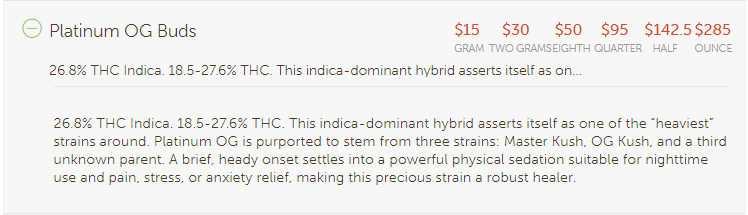
Indica vs Sativa, Sativa vs Indica, Indica dominant, Platinum OG Bud, Platinum OG
The Greenery menu description for an Indica-dominant strain.

Marijuana Sales Tax

Durango Marijuana

Easter Island is a dark place. It’s an atoll sheltered by isolation deep within the Pacific Ocean, and it’s hard to hear the lessons that island screams because it’s too far away—leagues of surf and time have quieted the prescient warning. Think about it: when you first read the words “Easter Island,” you pictured one of those gigantic stone heads and scoffed at the notion that something so comical could come from a “dark place,” so you probably don’t believe me; you probably don’t know that those gigantic stone heads are the only remnants of a once proud culture that committed suicide with greed.

As a side note, yes, this is a blog about marijuana taxation, and yes, I promise to get to that in a second, but first, we need to go back a little bit (just bear with me because I promise it’ll all make sense in the end). So, here we go…

The Moai

The Rapa Nui were fierce voyagers. They made their clothing from palm fronds, their skin was covered with black tattoos. They lived off the ocean and first made landfall on the shores of Easter Island around thirteen-hundred years ago. Back then, the island was a paradise. It was tall and safe, with sheltering cliffs that broke incoming storms—egg-laying birds had made a rookery out of those cliffs, and the flocks were thick enough to feed all the Rapa Nui. The high-rolling hills of Easter Island were forested with budding fruit trees, the valleys were verdant and rich with fresh water. And the island lizards were so majestic that rainbows shot out of their asses every morning at sunrise… That last sentence wasn’t one-hundred percent accurate, but you get the point: the Rapa Nui had found a home better than the sea, so there they stayed.

But then one day, some dude carved one of those gigantic stone heads. And then some other dude on the other side of the island saw the gigantic stone head and decided to carve his own. This one was a little bit bigger, a little bit better. The carving started to spread. Things started to change. The Rapa Nui started felling their forests faster than the fronds could grow. Wood was needed for scaffolding and for the moving of larger and larger stones, and barren patches started to appear on the rolling hills of Easter Island like a metastasized cancer. The rookeries were picked clean, and if the biologists are to be believed, an entire species of cliff-dwelling seabird was eaten into extinction because the Rapa Nui were too busy carving gigantic stone heads to farm. The meat ran out and the forests disappeared and those island people who once lived on the sea turned to the caves. They dug into the hills, and in the end when things were at their worst, the Rapa Nui embraced cannibalism. The last man died one-thousand years after the first man landed, and all they left behind was a barren island covered with eight-hundred and eighty-seven gigantic stone heads called “The Moai.”

Greed did that; greed did all of that. And it’s not like our species has evolved that much in the three-hundred years that’ve passed since the Rapa Nui started eating each other; that same brand of insular capitalization is alive and well in our culture today. When we stumble upon something good, we milk it and milk it until there’s not much left to bleed dry, and then we move on to the next craze, the next thing to consume and use up. Today, right here right now in Durango, Colorado, we’re milking recreational marijuana by taxing the hell out of it.

For the record, I’m not saying that if we overtax marijuana we’ll turn to cannibalism like the Rapa Nui because that would be far too hyperbolic even for someone who smokes as much as I do. But I am saying that if we’re not responsible—if we don’t battle back the greed that defines our species—we’ll ruin something wonderful just as it’s starting to grow. And in that vein, the amount of sales tax that’s applied to recreational marijuana in this town is ludicrous. I’ll give you an example to prove my point. The total sales tax someone in Durango pays when he or she buys alcohol is 7.9%; three percent goes to the city, two percent goes to the county, and the remainder goes to the state. But when someone buys recreational marijuana in this town, he or she pays 20% in sales tax; three percent goes to the city, two percent goes to the county, and an exorbitant fifteen percent goes to the state of Colorado (and to make it more confusing, fifteen percent of that fifteen percent also comes back to Durango).

Doesn’t that seem somewhat unfair? I mean seriously, wouldn’t you think that the root cause behind drunk-driving fatalities should be taxed more than the reason this town is seeing such a boom in tourism? And to make it worse, “they” are considering a five percent increase in marijuana-related sales taxes in this town, thereby charging more than three times the rate levied against alcohol sales. The bump would all go to our city. It sucks, but you can read about it here in The Durango Herald if you’d like (a couple of your Best Buds from The Greenery were even interviewed).

To switch gears, I will admit that from the outside looking in, it probably seems like local marijuana dispensaries are making money hand over fist, and it probably seems like a good idea to tax the hell out of legal weed so this town can prosper. But unfortunately, statements like these are rife with ignorance. You see, marijuana dispensaries are taxed twice: we have to pay an extortionate amount of tax when we buy our pot wholesale, and then believe it or not, we have to pay anywhere from sixty to seventy percent in federal income tax after we sell our marijuana to the community (yes, you heard that right, the federal government doesn’t see anything wrong with taxing an industry that they refuse to legalize). At the end of the day, our profit margins are just as thin as they are in traditional retail industries, and we simply cannot afford another tax increase, especially since we’re still recovering from the one that just went into effect on July first.

The reason for this is that we simply cannot lower the retail prices on our quality marijuana and stay in business; we’d have to keep our base price constant and hope with crossed fingers that people would be willing to pay higher prices for legal weed. But would they? If this new tax is accepted and implemented, and top-shelf pot starts selling for around sixty-three dollars an eighth in this town, do you think people will still buy it legally, or do you think they’ll go back to “their guy” who sells the same bag of pot for fifty bucks on the street? Do you see what I mean? We’re taking too much; we’re chopping down too many trees. I know this tax sounds just a little bit bigger, a little bit better, but it’s just too much. It’s just another gigantic stone head when we already have plenty of Moai. It’s more than this small island of Durango can support, and our industry needs your help. So please, call our city representatives and county commissioners and tell them that we’re already paying enough; you can find city council contact information via this link and county commissioners contact info via this link. Or use our letter to mail your concern, Letter to County, City on Marijuana Tax.  Or better yet, please attend the upcoming County Commissioner Meeting at 5:30pm on July 20th in the Board Room of the County Administration Building and the City Council meeting at 6:30pm on August 15th in the Smith Chambers at City Hall and fight against this initiative because in the end, such a tax could limit your options when it comes to purchasing legal marijuana.

Thank you,

-The Greenery

LEARN MORE FACTS & DATA ON MARIJUANA TAXATION here Marijuana Tax Facts